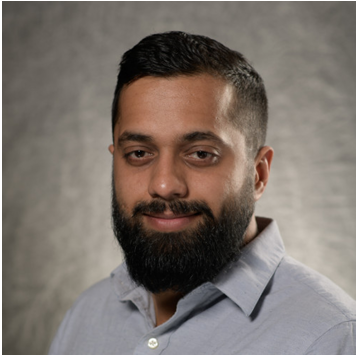
Q. What path should students interested in Data Science and Machine Learning follow?
A. Focus strongly on your mathematics courses, especially Probability and Statistics, Optimisation, and Operations Research. These build the foundation for data science, and neglecting them can lead to struggles later. Prioritise broad-based courses to ensure you’re ready to learn anything in the future.
Develop good programming skills. The language does not matter as much as being proficient in at least one and understanding it deeply. Maintain good grades – not just for the grades themselves, but for the disciplined process they build, as cramming won’t work.
Engage in research projects, even if the topic seems unimportant, as they showcase your ability to learn deeply and analyse. Internships and strong Letters of Recommendation (LORs) also matter, though initial work may be repetitive. Consistency will pay off. If your goal is entrepreneurship, these factors may hold less importance.
Q: How can someone publish a research paper, and what should be avoided?
A: To publish a research paper, start by approaching a professor, as the main challenge is formulating a good research problem. Professors will typically ask you to begin by reproducing existing work, such as replicating experiments or implementing codes, to build your understanding. As you gain deeper insights, you can propose improvements or new ideas that form the basis of your paper. Avoid approaching them without any background knowledge, expecting an immediate research problem, or trying to publish without thoroughly validating your results. Publishing is a gradual process of learning, reproducing, and then contributing.
Q.What factors helped you secure admission to a good university for your Master’s program? Did your grades and research projects during college play an important role?
A. Grades definitely matter, as poor grades can act as a negative filter in admissions. Along with grades, your application should highlight coursework and research projects you enjoyed, as well as strong Letters of Recommendation. It is important to start building your profile for masters applications around your second or third year.
Q. You were head TA and lecturer for several years, what do you like about teaching. What is the one trend you observe in students and what would you recommend to students?
A. Both roles were very different, but I enjoyed my experience as a TA more, especially for the programming course. Students would come up with different approaches and logic, making the sessions more interactive and discussion-based, which enhanced the learning experience compared to regular lectures. In terms of trends, while things may have changed over the past seven years, I observed that programming differs from subjects like thermodynamics or calculus where students usually start with similar backgrounds. In programming, those with prior knowledge find it easier initially, but over time, students who struggle and still persevere begin to understand the concepts deeply, which is very inspiring, especially given the difficulty of the tests. My recommendation to students would be to study in groups rather than in isolation, as it often turns out to be far more effective.
Q. How was your time on campus? How do you think college prepared you for the path afterwards?
A. My time on campus was quite memorable. A few friends from my major and I have stayed in touch over the years. Being part of only the third batch, everything was still new and developing, and with relaxed attendance rules, I used the flexibility to my benefit. It was a significant shift from the structured routine of school to managing everything independently. I took that time to reflect on what truly interested me academically and understand myself better socially. This gave me the mental bandwidth to focus deeply on courses and projects I was passionate about. I was often the first to arrive and the last to leave the labs. Overall, while the experience had its challenges, it was a very positive and enriching phase of my life.
Q. Were you associated with any clubs or departments during your time at BITS?
A. Yes, I was part of BITSAA, the alumni association, where we organised talks and visits by alumni to campus. I also helped set up Quark and assisted with registrations and other tasks during the fests, although it feels like a distant memory now. For me, these activities were more about the social aspect than learning. Looking back, I wish I had started earlier and made better use of the BITS alumni network, as it is a powerful resource that students often overlook. My advice would be to take the initiative and not hesitate to reach out.
Q. If you could revisit your time at BITS, is there anything you would choose to do differently?
A. If I could do something differently, it would be to attend all the courses more diligently. Back then, we had DC where we shared movies, games, and even found second-hand books, so academics sometimes took a back seat. Things did get difficult, especially in my third and fourth years, when there was a lot of anxiety about the future, which only intensified during my PhD. Addressing small problems early and having the right mindset really helps, and honestly, that approach forms the core skillset you need in any job.
Q. From your days in BITS, what is the on thing you would like to inculcate in your current life? What are your hobbies and what would you recommend for us to inculcate?
A. One thing I would like to bring back from my days at BITS is finding time to truly relax, like how we used to just take things lightly, with no rigid class requirements, and unwind by watching a show or simply doing nothing. I also miss how walkable the campus was; walking around was enjoyable, and I don’t walk as much now, so I wish I could inculcate that again. Campus life had its own charm, with minimal planning needed for daily activities. A few years ago, I would have recommended playing a sport, and I still think it’s important, pick any sport you enjoy, as it not only keeps you active but also helps build social connections. I also used to read a lot of fiction back then, which I have stopped lately. Overall, I would recommend finding ways to relax, staying active through sports, and making time for hobbies that keep you balanced.
Q: Describe your BITS life in three words.
A: I would describe my BITS life as lite, fun, and important. It was lite because of the relaxed environment that allowed us to take things easy at times, fun because of all the memories and experiences I shared with friends, and important because it shaped who I am today. Many of my closest friends are still from BITS, and overall, it was a truly positive and meaningful phase of my life.